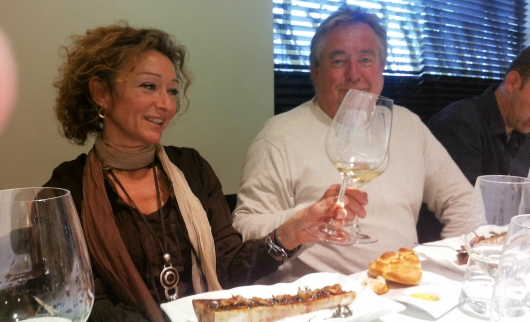
Les Useres, Poble de Vi, Ist Wine Fair.


Les Useres Fira de Vi 2013

Les Useres, or Useras in Castellano, is a hilltop village in the Alcalaten district of Castellon Province. It has a population which hovers around the 1000 mark and sits at 401m above sea level. Historically it was one of the most important wine-producing areas until phylloxera devastated the vineyards in the early 1900´s which plummeted from a peak of 13,500 hectares at the end of the 19th century to just 3500 by 1945, most of these illegal hybrid varieties. It was the wines from here that made Benicarlo and Viñaros ports so important from the mid 17th Century onwards with massive exports to the UK and important European capitals and as far as St Petersburg.

Opening the Fair.

Opening the Fair.

These vines ( lost varieties such as Edo and Señorito)  had to be grubbed up of course. Wine-making continued with around 100 members of the L´Alcalaten Coop just outside the town but today the revival that is taking place in Castellon province allows this tiny village to have no less than six separate wine producers!

Over the weekend of 15/16 June the village saw a fourfold increase in that population when it held it´s first ever wine fair, an initiave of the growers, new mayor and with the impulse of the Interior Tourism project which has seen the town join bodegas in Vilafamés, Benlloch and  Benecassim  create a new wine route.

The growers were joined by around 16 other producers such as  the Amas de Casa with their traditional bunuelos dripping in the local honey,  sheeps cheese from Tot de Poble, fresh tomatos, olive oils and almonds from the Mas de Fumeros, an horchata made from almonds rather than chufa, a local butcher with a range of traditional local sausages and sides of bacon as well as craft producers. All of which helped turn this into a very traditional local fair….just what Spain is all about!

The six bodegas are Baron d´Alba, El Mollet, Bodega Les Useres, Vicente Flors, Vinya Natur and Torregil. Each had brought a selection of wines to show and taste and some 3500 bottles were allegedly set aside for the two days!

Baron d´Alba

Baron d´Alba

I have visited Sergio Garcia´s vineyards and Bodega Baron d´Alba, Clos descarragordes ( Archives February 2011) and have tasted the wines from the property on many occasions in Castellon. Sergio´s father was on hand to ensure another comprehensive look at some of their wines during the fair.

On a hot day the White and Rosado were always going to be favourites! The 2012 white is a pure Macabeo, which is pale lemon, clean and bright with good long legs. On the nose fresh white flowers and red apples whilst in the mouth it is fresh, clean and with good fruit flavours a lovely acidity and full, long dry finish.

The Rosado 2012, which is a blend of Tempranillo and Garnacha is a very pale salmon pink, clear, bright and again has strong legs. On the nose it is redolent of red currants and in the mouth soft, fresh, ripe fruit, a very easy drinker for summer!

Later I tried the 2008 Tinta Barrica, the top wine, which is a blend of Cabernet Sauvignon, Tempranillo, Merlot and Syrah. A good deep red, the wine has long legs but was served a little too cold for me. On the nose it has a slightly vegetal nose, ( common with Cabernet Sauvignon and not a fault)  whilst  in the mouth there are lots of mature fruits. This is a nice wine!

El Mollet I have not yet visited but I have regularly tasted the Roques Negres. These fairs often throw up surprises and Juan Carlos Pavia was showing an `under the counter´ sample of his new syrah. This is a wine from deposit which will go to oak barrels later this week to `domesticate´ it. The grapes were from vines which are just three-year  old and this was the first harvest. A typical spiky young syrah with lots of bright purple colour, black cherry on the nose and in the mouth green tannins. I will be interested to see this develop and taste it again when it is bottled finally!

The Roques Negres remains a firm favourite. Medium bodied, cherry to ruby-red with long glycerinous legs. On the nose spiky fruit with chocolate and liquorice. In the mouth the wine is big, full, with hints of oak , cherry fruit and a long creamy vanilla finish. ( 70% Monastrell and 30 % Syrah).

The crowd grows!

The crowd grows!

Bodegas Vicente Flors I have visited twice, ( archives January 14, 2011) most recently to taste the newly released `M´  a wine from Monastrell. At this fair Vicente was showing three wines, and I tasted first the new Flor de Clotas 2011, a young wine from 70-year-old Tempranillo vines, with a whopping 15% ABV.

A youthful purple colour, long legs and evidence of glycerine! On the nose it has ripe , mature fruit in abundance, damson and plum, and hints of spice. In the mouth rich, with a full body, meaty, lovely structure and an easy pass across the palate before an explosion of fruit. Well worth investing in a few bottles of this!

The Monastrell is also from 70-year-old vines, and is cherry red and medium bodied. At a mere 13% ABV it does not have quite the glycerine of its young brother! Nonetheless there is plenty of red fruit, jam, with smoky hints. In the mouth well-balanced,well structured, smoke, and plenty of fruit. A good long finish, this wine is improving as it evolves.

Wines from the Coop.

Wines from the Coop.

The  Bodega Cooperativa Les Useres  is having to come to terms with its new upstart neighbours and evolve its wine making as well. They were showing a basic range and I tried the  Rosado. A very deep colour, dark strawberry, with long glycerinous legs. On the nose persistent ripe fruit, strawberry and a hint of caramel. In the mouth the fruit was a little over mature, but it retains a good fresh acidity and I liked it very much.

The Tinto was a deep cherry red with long legs, on the nose a mixture of red and black fruits and in the mouth young fruit, fresh, an honest every day drinker which is pleasant.

The above wines were from the Alcalaten range. There is a higher quality range , bottles of which were available to buy but not on general taste at the fair. Another time I hope to prise some of these open!

Last but far from least the wines of Vinya Natura are always a hit, particularly the Quatre Vents and the Babel Cava both of which I tried again at the fair. The Tinto is from Cabernet Sauvignon with four months in oak and produces a very easy drinking red which I have seen used at functions in the Palacio de Congresos in Valencia.

The Cava ia a prize winner having come out on top at the Els Bodeguers tasting prior to Valencia´s last cava fair. It is fresh and full, very satisfying with a long finish.

Sadly, Bodegas Torregil were not present on the first morning of the fair but as the Mayor has already announced the fair a great success ( I agree) and that there will be a second edition next year, it seems there may yet be another chance!

Souvenir Wine glass...Cheers!

Souvenir Wine glass…Cheers!


News from the IX Noche del Vino de la DOP Valencia.


Opening the White at Aranleon.

Opening the White at Aranleon.

Once again the organisers of the Noche del Vino had chosen a warm evening in June for this annual look at developments in the DO, in its Bodegas and to try new wines as well. It is also a night to catch up with the many friends and acquaintances made over the last few years! This is the night that professionals from the press, hotel and restaurant trades mingle with the bodega owners and distributors of their wines. interestingly this year it clashed with the equivalent fair in DO Alicante and a serious tasting offered by the distributors in Castellon although you would not have noticed any shortage in the number of people attending this event!

I started with Aranleon, one of several bodegas whose vineyards are in Utiel-Requena but choose the Valencia DO to market their wines. The bodega has been very lucky to avoid this years devastating hailstorms which have done considerable damage in the area.The new white Blanco Solo 2012 is a blend of Chardonnay, Macabeo and Sauvignon Blanc at 13%ABV. It is clean and fresh with glycerinous legs and a well-balanced fruit which is quite rich with a big clean acidity. A big wine.


Bisila Range.

Bisila Range.

The Verdil from Daniel Belda is also fresh but lighter in style and it seems amazing that in just four months the wine, which is always the first wine in the Northern Hemisphere to be marketed each year, will be available in the 2013 vintage! Belda has not been quite so lucky this year with a large area of the Chardonnay crop  in their Fontanars vineyards destroyed by hail.

Also from Fontanars I tried the 2012 vintage of the Brote white from Dominio de los Pinos. This is a barrel fermented blend of Viognier and Verdil and is a whopping 14.5%ABV. Old gold, clean and bright, with very long slow, fat glycerinous legs. The wine is unctuous too. On the nose white flowers, acacia and tropical fruits. In the mouth very full, peach, clean acidity and a very big silky mouthful of wine.

Nearby were the wines from Ladron de Lunas, another Requena based bodega  and marketing well with sales abroad. They now also make the wines for the African Literacy project, Bisila wines which I wrote about in February 2012 when the wines were made by Torre Oria. I tried the  Sauvignon Blanc 2012, 12.5%ABV, a fresh white with a big gooseberry nose and clean fresh acidity and ripe fruit in the mouth. To me this seemed to be French in style , very aromatic and pleasant. The Chardonnay also has a hint of the Macon style about it. 12.5%ABV and with a month in barrel, it is straw yellow, quite restrained on the nose but in the mouth well-balanced, dry and a long finish.

Arquis supporting Muscular Dystrophy.

Arquis supporting Muscular Dystrophy.


And on the subject of Bodegas helping charities Torrevellisca from Fontanars were showing their new wines from the Arquis range which support a muscular dystrophy charity. The Primum Selección 2010 is 25% Merlot, 25% Tempranillo and 50% Cabernet Sauvignon and is bright red, intense with ruby flashes and good legs. On the nose oaky and in the mouth smooth, easy drinking, with good mature red fruits.

Back to the whites and a very good one at that from Casa de las Vides, the Agullent bodega which I visited last year, ( Archives 2 June 2012) This is a blend of Macabeo, Verdil, Gewürztraminer and Sauvignon Blanc and 13% ABV. Very clean and bright, fresh from its blue German style bottle, the nose is complex and full of white flowers, ripe fruit, pear, melon, peach and is quite spicy. In the mouth this complexity is less apparent, a nice fresh clean wine good acidity but well-balanced with lots of fruit flavours.

The Rosae ( rosado) is frankly one of the best I have ever tasted. From Garnacha and Cabernet Sauvignon it is rose in colour, smells of fresh red fruit with floral notes ( rose) and in the mouth is fresh, dry , fruity and very satisfying. This is the wine I heard the most compliments about on the night.

There are of course wines from other parts of the DO and from higher vineyards. From Siete Aguas the wines from Sanchez Zahonera are at about 900m above sea-level. This young bodega won a gold in Brussels for  the first vintage they made! Now producing four wines and the white  Bressols from Merseguera is an excellent example of what can be produced at these levels from a dry white grape. Alfonso Sanchéz the winemaker has produced a white which is fresh, clean and bright and with a floral nose. In the mouth this searingly dry variety is easy to drink with an aromatic intensity and is  fresh and fruity. Long dry finish.

Wines from Polo Monleon

Wines from Polo Monleon

Not far from here are the vineyards and the Bodega of the Polo Monleon family in Titaguas, one of the underated bodegas of the Alto Turia. Under the Hoya de Castillo label Manuel, the current winemaker is producing a range of four excellent but sadly little known wines. The white which is a blend of Merseguera and Macabeo ( 20%) is a very good wine. Pale lemon in colour I was surprised at the depth and richness of the fruit on the nose, white fruits such as melon and apple. In the mouth an initial sparkle the wine is full, well-balanced and with well balanced acidity. This bodega should be the subject of next weeks post.

Also high up above Valencia in the village of Alcublas (Valentino) the coop is producing two very good wines this year. The white is a pure Merseguera called Balcon de Valencia and it too is a fresh, easy drinking dry white with fresh fruit on the nose and in the mouth. But it is the red Tempranillo Palacia which has surprised me this year. Normally not a wine I would buy in the past,  the 2012 joven is full of fruit and a real easy drinker! The bodega sells both wines for just 2.15€ a bottle and produces a traditional Moscatel Mistela and a range of excellent award-winning olive oils. An easy drive from Valencia it is worth a visit for the views as well!

Reymos 1918

Reymos 1918

From the Moscatel growing area around Cheste, Chiva and Turis, the bodega in Cheste has increased its range of sparklers from the variety, in this case a `cava´ style called Reymos 1918. The bodega is of course part of the giant Anecoop brand and the bottle has a label designed by Montesinos. A brut nature the wine is winning prizes already. Clean fresh with hints of peach and orange skin on the nose it is fresh in the mouth with a creamy long full finish. A serious wine if a little overpriced for me.

The four sub-zones of the DO ( Alto Turia, Valentino, Clariano ( which includes the Terres dels Alforins) Moscatel and of course bolstered by the wines of Utiel-Requena using the Valencia DO have a wide diversity and produce wines for all tastes. Sadly there was no time to try all 200 wines on show given the crush and the social nature of the event. At least next year i can concentrate on some of the bodegas I missed this year!

Finally it is of course the event which acts as prize-giving for the DO. Chief amongst the worthy winners was Pablo Ossorio, technical director at Murviedro and one of the owners of Hispano-Suizas who was recognised with the DO´s Order of Merit.


Pablo Ossorio, Order of Merit.

Pablo Ossorio, Order of Merit.


39th International Fideuà Competition, Gandia.


fideua_1 Gandia 2013


Gandia is to Fideuà what Sueca is to Paella, L´Alcúdia is to Putxero and Xativa is to Arroz al Horno – its spiritual home and home to the annual International competition to cook the best example. Yesterday was the turn of Gandia to host the 39th edition of the competition and gastronomia day in the Bayren Hotel on the seafront.

Setting up In the Grounds of the Bayren.

Setting up In the Grounds of the Bayren.

Accreditation for competitors and invited guests starts at around 10 am but until around 12.30 the attendees mill around the competion area, chatting or strolling along the seafront in their whites whilst the hotel staff are briefed on how to attend to the guests once the various sponsors tents open.

The event is sponsored by a number of different companies, Bodegas such as Pago de Tharsys and Chozas Carrascal from Utiel-Requena who provided the wines for the subsequent lunch, cheese producers Queserias Cuquerella whose trademark Flor de Oro traditional products were served alongside the new craft ale from Gandia, La Delicà, and less traditional beer from Mahou.

The competition also attracts a large press presence, TVE, Cadena Ser, A3 and a host of bloggers and photographers.

To say that  the Competition is important to Gandia is a major understatement. The Mayor, Arturo Torro went so far as to claim that it is the `major ambassador´ for the town and that it would lead Gandia out of the crisis long before the rest of the Valencian Community recovered…..What is certain is that Gastronomy is a major part of the communities tourism strategy. The CdT (  The Valencian Colleges for training in Cooking, wine and waiting service) were all represented by competitors and waiting teams.

And Fideuà is what the day is all about….what exactly is it though?

Well, Paco Alonso the TV journalist and acknowledged expert in Valencia gastronomy calls it the `Queen Consort´ alongside Paella Valencia. He attributes its creation in to Bautista Pascual Sanchis a cabin boy on a local fishing vessel. It was adopted in local restaurants and, as tourism grew in Gandia by the hotels which were springing up.

Chef´s Work Station.

Chef´s Work Station.

Essentially it is a dish consisting of monkfish, cuttlefish, common and Dublin bay prawns,  garlic, tomato, stock made from rockfish, pimentón, saffron, olive oil, salt and the fideuà which is a small pasta.

And so, on a fresh grey day in Gandia, a day not suited to a walk on the perfectly manicured and flat beach, the competitors from Restaurants across the Valencian Community, from Cordoba  and from France took to their stations, each of which consisted of a gas ring, paella pan, spoon, and the fideuà. Now, each chef has his own secret recipe for the stock that flavours the dish and the pasta is cooked in. These are brought along in a variety of containers, some large saucepans, some concentrated and to which water is added.

Nor does everyone add the ingredients in the same order. Traditionalists put a little oil in the centre of the pan and spread salt around the outside. The gambas and cigalas ( prawns) are cooked first then removed,  followed by the monkfish and then a sofrito of tomato, garlic  and pimentón . Yesterday I saw prawn heads and tails being hand pressed in the pan to extract every last drop of flavour, but the next step is to add the fideuà to the pan and cook it gently turning it in the garlic, tomato, oil etc. Then slowly the stock is added and the pasta cooked to perfection at which point the dish is decorated with wheels of the seafood, or in some enterprising cases these are presented as if they are still alive and waiving a claw!

Starting with the Prawns.

Starting with the Prawns.

Then the heat is turned off and the dish rests before being passed to the jury for assessment and then gifted to the public who can book a table in the hotels restaurant area. The jury this year was led by Evarist Miralles, Spanish Best Chef in 2011 and consisted of 10 other jurors drawn from the press, gastronomy clubs and  experts in cooking traditional dishes.

The Winning Fideuà!

The Winning Fideuà!

For the invited guest and sponsors ( some 500 people) there is a more formal lunch which yesterday consisted of traditional plates of Ibericos and cheese, prawn with chard on toasts, stalks of thistle in a salad with tuna loin, a mandarine sorbet, Fideuà, and a chocolate mousse with orange sauce and summer fruits.

This was well accompanied by the excellent Las Dos Ces white and red from Chozas Carrascal, followed by the equally excellent Carlota Suria Brut Nature from Pago de Tharsys.

Then begins the awaited prize giving and results of the competition, strung out between speeches  from government representatives and local dignitaries.

As there were about fifteen prizes space does not permit full details in this post!

The major prizes relating to the competition were awarded as follows:-

Best Tapa presented by one of the CdT colleges went to Castellon and the Best Fideuà from one of the colleges was won by Gandia.

Best Pudding made with orange went to Rte Chef Amadeo of Gandia.

Rte Maritim from the port of Gandia won the award for the best Tapa.

In the International Fideuà Competition third prize went to Rte Puturrú de Foie, Gandia, Second went to Hotel Kazar, Ontiniente, and the overall winner was Victor Navarro Gimeno, the ever present owner of Casa Granero in the Serranos village of Serra. Victor is an acknowledged master of traditional Valencian gastronomy and his dish was traditionally presented, which may be a useful lesson for competitors to note next year. I hope to be there to witness this very friendly but fiercely competitive day of quality cooking. In the meantime Victor, I will be calling in  for the recipe for your stock!


Victor with the Collar of santa Isabel.

Victor with the Collar of santa Isabel.


On Grand Masters, Cosmetics and Oil….A Visit to Bodegas Besalduch & Valls, St Mateu, Castellon..


Grand Master Range.

Grand Master Range.

In the North of Castellon Province, in the region called the Maestrazgo, lies the historical town of Sant Mateu. Here in a recently refurbished old town-house the head office of Bodegues Besalduch y Valls can be found, a new bodega producing wine since 2009.

The Maestrazgo takes its name from the Grand Masters of the Order of Montesa, one of the Catholic chivalric orders which succeeded the Templars and Hospitallers after the suppression of the former order. The order was based in Sant Mateu and inherited on its creation vineyards from Arab land-owners, gifts to the Christians, which produced a dense and alcoholic wine.

Together with wool this was the economic driver in the region. Throughout the 16th-18th centuries the wine increased in popularity and was being exported freely to the top tables of the UK, Holland, St Petersburg, Hamburg,Livorno Brasil and other South American countries. Known as Viña Carlo, or Carlon, the wine was similar in style to a port and taken as an aperitif. In the nineteenth century some 40k Hl were being shipped, much of it to Bordeaux where it was also used to boost claret, a practice which continued until Phylloxera wiped out the vineyards at the turn of the 20th century.

Viña Carlon.

Viña Carlon.

Today this new bodega is reviving the wine-making of the area and has its vineyards in nearby Llomes with an experimental plot at La Coma. Currently they grow Macabeo, Sauvignon Blanc, Chardonnay, Moscatel, Tempranillo, Cabernet Sauvignon, Merlot, Syrah, Garnacha Tinta and Garnacha Tintorera.

The wines are generally each vinified separately and sold as monovarietals, each with the name of one of the former Grand Masters of the Order, with detailed labels and the seal of the order making the bodega´s style quite distinct. This `Grand Master´ range is vinified in nearby Benlloch by Jose Luis Sanchez. The Viña Carlo in its distinct bottle is vinified at La Encina by Jose Maria and Carlos Espi and is a joint collaboration with the University Polytechnic of Valencia, Valencia´s   wine school.

The white Sauvignon Blanc `Llansol de Romaní ´has a short crianza after long maceration and cold fermentation to capture the essence of the variety. Pale straw yellow with green flashes, clean and bright. On the nose, clean fresh, grass, apple, gooseberry and elderflower developing into tropical fruit with pineapple and passion fruit. In the mouth clean and fresh acidity, nice round fruit and a steely finish. Quite French in style and a very nice wine.

Turning to the reds the Tempranillo `Guillem D´Eril´crianza is already a prize winner, gaining a silver at the ASUCAP Best wines from Castellon fair earlier this year. A deep cherry red colour with long glycerinous legs. The nose is almost perfumed, rich ripe fruits, balsamic notes from the nine months in French oak, in the mouth it is round, full-bodied, smooth, well-balanced. Long fruity finish….an easy drinker.

The Merlot Crianza `Bernat Despuig´ also has nine months crianza.  Plum red with long slow fat legs. On the nose sweet red fruit jam, chocolate and spice and in the mouth round, full-bodied, well-balanced, elegant and velvety with a long full finish. A big wine.

The Syrah `Francesc de Sanz´ crianza is very typical of Jose Luis Sanchez´s style, a wine-maker who understands and gets the best out of the variety. In colour it is intense, violet, with very glycerinous legs. On the nose, blackcurrants and cherry, peppers, liquorice…intense. In the mouth this intensity is in soft fruit, ripe, full-bodied with a long full finish. a serious wine.

Rodrigo Vera.

Rodrigo Vera.

The Cabernet Sauvignon `Arnald de Soler´is another plum red wine with long legs. On the nose complex with red fruit jam, sweet red peppers, peppery spice and balsamic notes, in the mouth it is round  , fruity, soft, elegant again with a long finish.

The Garnacha Tinta `Berenguer de March ´is a certified Organic wine and enjoys good varietal characteristics, plum coloured with glycerinous legs, a mixture of fruits and jams on the nose and in the mouth an underlying sweetness, not cloying, which marks it out as different. 14%ABV.

The Viña Carlo is a blend of three varieties, Garnacha Tinta, Garnacha Tintorera and Bonicaire ( Trepat) . Intense black cherry colour, long glycerinous legs but a dry, almost astringent nose to begin with, aromatic and in the mouth full, round, gentle sweetness with well-integrated alcohol ( 15% ABV). This is very much a wine for fresh fruit, pate or foie gras

The bodega is currently selling its wines locally through specialist wine shops or in restaurants, but they exhibited in Germany at Prowein and are hoping to tie up a deal with an English importer shortly.

The product line does not end with wine either. Two other ranges are available, a series of quality AOVE olive oils and a range of cosmetics.

They will sell you a tasting box of ten separate varieties of Olives but I tasted four which are available in the shop in reasonable quantities, ranging from a smooth apply basic oil through to the Certified Farga variety from trees with over a thousand years of age, a variety which is native to the Maestrazgo, Rome and part of Greece. It has won Gold medals at the Israeli International Olive Oil Fair in both 2011 and 2012. It is full, fruity and slightly picante.

Range of Olive Oils.

Range of Olive Oils.

Add to this a range of olive oil based cosmetics such as soap, moisturiser, anti-wrinkle cream and a cologne the bodega has much to interest the visitor. The plan is to use the centre as part of a wider visitor centre taking in the olive groves, vineyards and including the family owned Casa Rural and restaurant. In a couple of years it is hoped to re-open the town´s old wine cooperative not as a bodega but as a Wine-museum covering the long history of this activity in the region. In a town with 17 historical monuments already there will be plenty for visitors to see.

Tapas in the Square.

Tapas in the Square.

My thanks to Jose Maria the bodega´s owner and Roderigo Vera the commercial director who made the visit very full and for the suggestion  to try the nearby La Cantonera bar in the square where we enjoyed a range of home-made tapas which are highly recommended!

The bodega has a website www.bbesalduchvalls.es/ and a Facebook page.,

A Visit to Bodega Masia de la Hoya, Segorbe, IGP Castellon.


Masia Hoya

Guzman Orero Clavero was the first wine-maker from Castellon that I met….some three years ago now. At the time I was struck by the enthusiasm he had for what then was an emerging revival of a historically important wine-making tradition in Castellon and the quality of his own wines from the Masia de la Hoya. I have met him three or four times since and he has always been keen to talk about progress and bringing wines from Castellon up to  IGP status, the step before full Denomination of Origin ( D.O.)

The last time we met was in Benlloch in March at the local agricultural fair ( see archives March 24 2013). Following a tasting of four of his current wines I was keen to visit the bodega for myself and Guzman, who has always pointed out that the bodega is not geared up for wine-tourism, suggested I come in May when the vines were in bud.

Deposits in the Bodega.

Deposits in the Bodega.

Yesterday I had the privilege to visit the bodega on the outskirts of Segorbe, the vineyards in the hidden valley in the hills and the offices in the centre of town.

I could not fail to feel the sense of history, the  co-incidences over centuries as Guzman described his and previous owners experiences as we toured the property.

The working part of the bodega is opposite the family garden nursery run by his sister. The Masia de la Cruz is an ancient site with an old bodega on it. Historically it was a place for waggoners to rest their horses on their long journeys….the `Cruz´element having nothing to do with the church on this occasion. For all that Guzman works here on his wines in cramped conditions, the yard is full of very modern wine-making equipment including a peristaltic pump and high level sorting table…………the press also being at a higher level allowing the waste to be dropped directly into trailers to avoid cleaning-up after the harvest……a good ergonomic practice!

Here Guzman also has a small barrel park, laboratory, equipment store and bottling line but once  bottled the wines are labelled in the offices as there is no room for that part of the equipment in the bodega! Here he explained how he had started, full of hope, in 2004 and the crop was almost ruined by severe hailstorms. An agricultural engineer by trade and a newly qualified  enologist he was left to salvage what he could and spent the year with three small deposits experimenting with fermentation, developing flavours etc. From these lessons came Orero Seleción his top wine.

Guzman in the Barrel Park.

Guzman in the Barrel Park.

In the barrel park he showed us the Syrah quietly ageing in a mixture of Limousin, Vosges, American and Rumanian oak, 4-5 year old barrels where it will remain until it has been there two years. Next year he hopes to invest in new barrels.

From here he took me to the vineyards, in a natural valley surrounded by high wooded hills, overlooked by the ancient Masia de la Hoya. It is one of the most beautiful places I have ever visited with glimpses through gaps in the hills to more Northern parts of Castellon province. In the base of the valley neat rows of Monastrell, Syrah, Cabernet Sauvignon, Garnacha and Merlot stand out, each row with its marker identifying variety, clone and year of planting between 2002 and 2005. The soil is easy draining clay without too much stone despite the run-off from the high hills. The plan is to plant more vines to bring the current 14 hectares up to 25 in total.  All the varieties are red, homage to his father who loved red wine! Guzman explained the reason for planting the vines at half-metre intervals in double espalda. The trick was one he learnt from the Perez family of Clos Martinet  and ensures the bunches of grapes are small and loose bunched which generally gives fresh fruity wine with lots of colour.

The old Masia itself is in a state of part restoration. Guzman´s father had intended that the bodega would eventually move here in total and work on the Masia and the new facilities had commenced in 2009 but came to a stop on cost grounds later. Nonetheless part of the old chapel had been restored, part of the old building pulled down, exposing the old `lagars´where the grapes were trodden by foot, the new equipment shed and bottle store built into the hill below the Masia and the large water deposits, fed by a natural spring .

The old Masia.

The old Masia.

Inside Guzman told me were old wine tanks and evidence of a press.   Outside ancient table grape vines wound their way over the supports on a terrace and water from the natural spring gurgled into a `lavadero´before falling away in a conduit towards the bottom of the valley. In the back wall of the Masia sits the frame of the rose window in the chapel . This is the bodega´s logo.

Looking Over the Vines.

Looking Over the Vines.

Guzman explained that none of the history of wine-making was known when they bought the property. They had purchased it on the grounds that it would support fruit trees, in line with the family business run from Seville in which Guzman had worked for ten years before returning to Segorbe. However the local library turned up papers going back to 1884 from which it emerged the tenants renting the land had not paid their rent ( wine) to the local Catholic seminary for three years! The reason it turned out was that they had suffered from hail and permission was being sought from the Bishop to allow them to continue there. Further research showed wine was being made on the property as early as 1773. Guzman said he felt very at ease with his predecessors and the shared experience of the hailstorms in his first vintage.

Guzman Explains the Planting Policy.

Guzman Explains the Planting Policy.

We left the valley, somewhat reluctantly and I followed Guzman´s car back down the dirt tracks and under the old narrow railway bridges which would certainly stop tourist coaches ever getting to the property! We finished our tour in the old offices in the centre of town where I selected some wines for an upcoming tasting.

Tasting notes for the wines appear in my 24 March blog. Suffice it to say they are excellent and a testament to the enthusiasm and skill of this personable and particular wine-maker under whom the bodega will undoubtedly continue to grow as long as sales of wine continue and time is not diluted by his role as Secretary of the Terres de Castellon group of wine makers.

Fontanares and the Terres dels Alforins……2nd Wine Fair.


Wine Route Map.

Wine Route Map.

Back in December 2009 the Valencian Government decided to invest some 1.9 million € in a project to promote the wines of the Terres dels Alforins, broadly the area of DO Valencia ( Clariano) which encompasses the towns of Fontanars, Moixent and Font de  Figuera. The plan was to create more paths for walkers, in what is considered the `Tuscany´ of Valencia, and bring a boost to the areas casas rurales and restaurants. The area is not just known for its wines, being historically an important centre of Iberian history, but also for its food.

Wine Route Launch.

Wine Route Launch.

For Valencia progress was relatively quick! The University and  all the interested parties worked together to produce an official launch of the new Wine Route, one of four in the Valencian Community, on December the 20th last year…..an evening in the historical old Nau ( or cloisters) of Valencia´s  University. The launch was of course followed by an extensive tasting of wines from the associated bodegas together with artisan breads, cheeses and the dried sausages from the area.

It was with some interest therefore that yesterday I attended the second wine fair held in the town of Fontanars ( or Fontanares dels Alforins) , the first having preceded the launch and which I had been unable to attend.

The bodegas associated with the wine-route are Daniel Belda, Torrevellisca, Los Pinos, Enguera, Los Frailes, Heretats de Taverners and Rafael Cambra ( from Fontanars) , Coop La Viña and  Arraez ( Font de Figuera)  and Clos de la Vall and  Celler del Roure ( Moixent). The three towns surround the well-preserved site of Les Alcusses an Iberian settlement dating back to the iron age.

Fair Poster.

Fair Poster.

Clearly I was not the only interested party! During the fair I encountered friends, acquaintances and fellow bloggers from Castellon, Valencia City and from bodegas in DO Alicante.

The main street had been closed off from top to bottom and each of the bodegas had a table from which to dispense their wines. Tickets for entry were 3€ which gave you eight tastings and a further 2€ rented a wine glass for the purpose! ( Not it seemed that the bodegas were much interested in collecting tickets!) There were also a market stall dispensing tasting samples of local cheeses and meat products and a local restaurant was cooking a traditional Gazpacho Manchego (3€ a big bowl full) in a side street……over wooden fires….something that would never be allowed in the UK on spurious health and safety grounds! Whilst the gazpacho cooked, the town filled up and those who had bought tickets were invited to help themselves to fried chicken wings and livers and garlic, the unwanted parts of the birds in the main course!

In very atypical Valencian style, access to this food was relaxed and not subject to the normal feeding frenzy at such events!

So, between 11.00am and 2.00pm, the crowd moved around the stalls, chatting to the bodegas and their staff and sampling the wines. Come 2.00pm an orderly queue mainly of senior citizens with their pans collected their portions of the Gazpacho to take home whilst the rest of us stood in the street or moved off to the church , outside of which the town hall staff had considerately provided chairs for those who preferred.

Preparing Gazpacho Manchego.

Preparing Gazpacho Manchego.

Once eaten, the fair re-started and carried on till 10.00pm!

We had commenced with the Verdil from Daniel Belda, the local variety with which he is credited as reviving and saving. The wine is picked in August and is always the first white wine ( from the new vintage) to be put on the market. It debuts at the L´Alcúdia Gastronomy fair in early October and at the time I felt the 2o12 was still not quite ready. It certainly is now! Straw yellow in colour with green flashes. On the nose typically apple and pineapple and in the mouth fresh, nice acidity balances well with the soft fruit flavours. The 2011 Pinot Noir is much paler than normal, testimony to the difficult year. Light cherry red, medium bodied, good legs. On the nose more like a light Burgundian wine, fruits of the forest and  cherries. In the mouth nicely balanced, smooth tannins, light red fruits and a good finish. An easy drinker.

Daniel Belda´s Stand.

Daniel Belda´s Stand.

We moved on to the stand of Antonio Arraez. His A2 Verdil is also a fresh fruity white with perfect acidity. We also tried the Eduardo Bermejo white, a blend of 60% Moscatel de Gran Menudo with the remainder being Merseguerer and Macabeo. The wine has a very muted nose with just a hint of apricot. In the mouth it is subtle, hints of orange and mandarine balanced with a fresh acidity make this an excellent wine with a long finish. Love it!

The wines from the Cooperative of St Peter the Apostle in Moixent, sold as Clos de la Vall  where the winemaker is Pablo Cortes, are favourites. The PX ( Pedro Ximenez ) a dry white with six months crianza on the lees makes this a big wine. Golden yellow, clean, bright and on the nose toasty, buttery with dried grapes and just a hint of yeast like a good sherry ( this is a variety from that region). In the mouth light acidity, almond and orange peel vie with membrillo to make it deep and complex with a mineral finish. The best PX from DO Valencia without a doubt! The red Vino de Autor with its label signed by Pablo is a blend. Deep cherry red with long legs, on the nose sweet black cherry, plum, and in the mouth sweet mature fruit, round, full, with smooth tannins and a long , satisfying finish. Not cheap at 10€ a bottle but a big wine.

Pablo Cortes and his Vino d´Autor.

Pablo Cortes and his Vino d´Autor.

The wines from Torrevellisca are also no strangers and the two new releases are worthy of further comment. In the Embrujo range the new white from Verdejo is excellent. Last years Malvasia has been supplanted by this new offering, a Verdejo in Valencian style! Normally the white variety of Rueda is full of gooseberry and cats pee. This is also a pale lemon yellow but that is where the similarity ends. A very clean, bright wine with golden flashes and small bubbles. On the nose complex. Yes there are tropical fruits such as lime, but there is apple as well and maracuña ( custard apple) and hints of white flowers. In the mouth the wine is fresh and fruity, a lovely acidity balances well with quite unusual flavours including the custard apple and citrus. A good long finish. A very easy drinking white which I love.

The red Embrujo is a blend of Cabernet Sauvignon, Merlot and Tempranillo. It has had just a month in oak. Over the last two months I have tried it several times, showing it at the Pedralba wine club as well. Then it needed a little more time in bottle. Now it is fine, an intense cherry red colour with a violet edge, good legs. On the nose smooth red fruits. In the mouth fruits of the forest, strawberry, full with very light tannins, well-integrated and an easy drinker…..already a prize winner in both Germany and China…..can´t say more really!

Back to the whites and the Reixu from Heretat de Taverners. A blend of Chardonnay and Sauvignon Blanc it is straw coloured, with green and gold flashes, clean and bright. Green apple, pineapple and banana combine on the nose with the hints of butter provided by its short period in  oak. Full, fruity but fresh, a very pleasant mouthful.

New Labels from Heretat de Taverners.

New Labels from Heretat de Taverners.

Unfortunately time and the need to drive back to Valencia did not permit more tasting on this occasion

However this fair had a very different feel about it, whilst a new event it had the distinct traditional feel of a Spanish street fair, where everyone is relaxed and enjoying themselves, the donkeys mingling with the crowds whilst giving young children rides, but at the same time having something of the flavour of the locality. Maybe it is a rich history from the Iberian period through the Roman until now? Whatever it is it permeates the vines and the wines which make this pretty corner of DO Valencia special!

Ready for a Ride!

Ready for a Ride!

Ricardo´s Guide to Valencian Craft Ales.


Draught and Bottled Beer from Montmira.

Draught and Bottled Beer from Montmira.

As I observed last week for every space at the Valencian Wine and Food Fair which had been vacated by an absent bodega Valencian artisan breweries  were more than happy to fill your glass with a craft ale. What is behind the boom in this sector of the drinks market?

What is a craft ale? Essentially it is a beer which is made from water, malt , hops and yeast of the highest quality. They are natural beers and are not pasteurised. They may be flavoured with natural ingredients as we shall see later. Unlike commercial beers which are brewed in about six hours the craft ale has a much longer gestation. The wort will be made and then left for as long as ten days to allow all the flavours to develop before fermentation takes place , usually in the bottle, and then after this stage is finished another six weeks or so will pass before they are put into the market place. The bottles will still have the spent yeasts in the bottom which, as they break down add protein into the beer.

Cerveza Genesis.

Cerveza Genesis.

Historically there are two areas in which craft ales have been successful in the last couple of generations. Firstly of course there was the revival of `real ales´ in the United Kingdom, a reaction to the awful commercial beers such as Double Diamond and Watneys Red . CAMRA, the campaign for real ale, always preferred that beer was made in a wooden cask but ales such as Thomas Hardy ale, Charringtons Barley Wine, Whitbread White label and the original Guinness which were all made as described above were given the stamp of approval.

In the United States a similar reaction to Coors and Budweiser led to the movement to create micro-breweries which bottled their craft ales although in some cases these are still made in aluminium kegs and not all are living beers.

The phenomenon has reached Spain and Valencia is a major growth area as was demonstrated by the number of exhibitors at last weeks fair. So who are these micro breweries and where can they be found?

1. L´Alcora, Castellon, Montmira.

This producer has 5 ales currently to its name. Bresca, which is flavoured with rosemary honey, Tonbatossals, a stout, Penyagolosa, an IPA, Columbretes, an aleand  La Roxa,  which is a darker ale flavoured with ginger. More details can be found at www.cervesamontmira.com . The beers range between 4.9-6.8% ABV.

2. Abadia Española, Benicalap.

Brewery founded in 2008. One ale produced, Abadia. 5% ABV.

3. Altura de Vuelo, Casas del Rey.

Two beers produced by Cervezas Fernandez Pons, a family brewery. Altura de Vuelo and Pons 1840.

The first is a hoppy bitter at 4.2% ABV. The second is a smoother ale with a higher graduation. www.cervezasfernandezpons.es

4. Antara.

A malty  ale flavoured with chufa. Made by Fernandez Pons for Terra i Xufa. 4.2%ABV.

Beers from Badum.

Beers from Badum.

5.  Badum, Peñiscola.

Three ales produced, Badum Pilsen, Badum Trigo and Badum Alcachofa, the latter flavoured with artichoke.

http://cervezasartesanasbm.com/

6. Birra e Blues, Alboraya.

Three beers produced, Doble Malta, Rubia and Tostada.

Attached to a restaurant on the Playa Patacona there is an on-line shop www.birraeblues.com

7. Cerveza 2.0.

A complex ale made by Montmira in Castellon. I think this is a very English bitter using several malts and three different hop varieties. 4.8%.

8. Galana, La Yesa.

Three beers from Artesanas Solaz Varea, Rubia, Tostada and Negra. http://cervesagalana.es/

Draught Cervesa from La Yesa.

Draught Cervesa from La Yesa.

9. Genesis, Fortaleny.

Pale Ale Ambar 5% and flavoured with orange flowers from Vendrell Gourmet. www.vendrellgourmet.com

10. Gran Prima, Montcabrer, Ontinyent.

Two ales, Gram Prima 5.2% and Gram Freda 4.8% , from Cervezas Montcabrer in Ontinyent. www.cervesagram.com

11. La Lluna, Agullent.

Four ales, Lluna , Lluna Bruna, Lluna Negra and Lluna Morisco ranging between 4.3% and 6.5%. Lluna Morisco is aged in oak and steeped with  local herbs. www.bodegasartesanas.com/

12. Mons Cervesa Artesana, Massalavès.

Three ales produced, Pilsen, Pale Ale and Imperial Stout. www.maltamons.com

13. Nispra, Cervesa Spigha, Alcoy.

Four ales from Spigha, Na Valora, Nispra, Gurugú and Voromar. The  Nispra is flavoured with nisperos and made for the local co-op.  www.spigha.es

14. Sacristan, Beltri, Alicante.

A 6% ABV Amber ale stopped with a cork in the cava style. www.fundesem.es

15. Senia, Benifaió.

Three beers, Blat, Rossa and Tostada. No website currently but they do have a Facebook page.

16. La Socarrada, Xativa.

6% Honey ale flavoured with honey and mel de romer. www.lasocarrada.com

Tyris from Riba-Roja.

Tyris from Riba-Roja.

17.Tyris. Riba-Roja

Tyris produce 5  beers, Tyris,VIPA, Paqui Brown ,  Porter and Riu Rau, the latter for an outlet in Benissa. www.cervezatyris.com This maker also encourages visits and undertakes training courses in brewing!

18. L´Ombria. Vallada.

Three ales, Blat, Ipa and Red. http://lombria.blogspot.com.es


Most of the ales are produced in 33cl and 75cl  bottle format as well as draught varieties, some in 30 litre kegs. Many have on-line shops or the beers are available from specialist outlets such as the Els Bodeguers chain.

What does the future hold for this relatively new industry? Given increasing interest and sales as well as awards at National and International beer fairs the future looks good. I understand several of the micro-breweries are trying to form an association of Valencian artisan beer producers. With Jacobo Pons of Fernandez Pons now President also of PROAVA the Valencian Government agency responsible for promoting food and drink, the right links are in place.

Who knows, there may even be a Valencian Real Ale Festival ….now there is an idea!


XXVth Valencian Wine and Food Fair…The Rise of the Artisan Valencian Micro-Brewery!


Fair Poster.

Fair Poster.


The Valencian Wine and Food fair is in full swing, five days into the six it runs and after three days of visiting some changes are very apparent!

The number of bodegas has undoubtedly continued to diminish  from its heyday of two to three years ago. Initially this may have been due to the crisis and bodegas re-allocating their marketing budgets. Now however there is clearly a more positive move away to concentrating on the International wine fairs such as the recent Prowien in Dusseldorf, the London Wine Fair where the export markets have more potential. One small bodega has told me they have orders for palettes of each of their wines following their first foray into the German market.

Cervesa Montmira...One of the new stands.

Cervesa Montmira…One of the new stands.

Don´t get me wrong, there is still a strong attendance by bodegas but only two have come from Castellon this year, Divins and Vinya Natur. This may also reflect their own wine fair at the beginning of March was followed up by a stronger showing in the fiesta week of the Magdalena.

DO Valencia is strongly represented by bodegas from the new Terres de Alforins wine route centred on Fontanars and Moixent who also have their own fair in just two weeks time. There is also a strong showing from the bodegas of the Valentino and  particularly those from Alto Turia.

Without Finca Collado DO Alicante would be reduced to representation by its DO only and Utiel-Requena has only its DO  Vera de Estenas, Cuevas and Marsilea , Vegalfaro, Finca el Renegado and one or two others compared with past years……no Pago de Tharsys, Chozas Carrascal, Ladron de Lunas  or Dominio de la Vega to name but a few.

Wines from Alonso Sanz.

Wines from Alonso Sanz.

One new bodega is debuting this week, Alonso Sanz from Aeilo, near to Ontinyent.

All the wines are currently Vino de Autor, the Bodega not yet having joined  DO Valencia ( Clariano).

We tasted four wines from the bodega starting with the Macabeo. (There is also a Sauvignon Blanc). This was a nice golden colour with long legs. On the nose the wine was full of ripe apple and in the mouth the fruit was rich and well-balanced with acidity having a long full finish. The wine is not long bottled and needs time to settle down but clearly had great potential.

The joven style Syrah 2012 is a really good rich, deep cherry with strong legs. On the nose cherry fruit, with a little liquorice although this also is freshly bottled. In the mouth the fruit is quite spiky, whilst the wine passes easily across the palate, it too needs a little more time to settle down.

The Gran Selección 2012 Roble was fermented in barrel and aged  therein as well. Again a deep dark cherry colour, with a purple edge and long legs. On the nose there is a little green pepper, some soft fruit and a hint of oak. In the mouth this Tempranillo Syrah blend is very smooth, green pepper and  vanilla are apparent in a wine where the fruit, tannin and alcohol are in perfect harmony. A very nice wine!

Finally we tried a 2012 Roble with Monastrell which has been in Spanish oak. A little less colour but still has good legs. On the nose it is very closed and despite soft  fruit, it is clearly needing some time to develop. I hope to visit in May or June to explore about this promising bodega.

Finca Collado Blanco 2012.

Finca Collado Blanco 2012.

One bodega which needs no introduction is Finca Collado. The 2010 white won silver at this fair two years ago and then a Bronze Bacchus award. The 2011 is about to be named as one of the seven best wines from the Valencian Community. The new 2012 to me is even better and they are very excited about it at the bodega. The white is always consistent when first released having a good balance of tropical fruits and acidity. This year is no exception, the apricot perfume on the nose with pineapple, a little banana and a touch of citrus….lemon sherbert. In the mouth and despite only a couple of weeks in bottle, this is rich, ripe, full but beautifully balanced, the acidity giving a long full finish with a hint of minerals.

I cannot believe this will not win prizes nor will it be available for long….get your orders in now! It will be interesting to see if it develops with the orange marmalade and honey finish of the ´10 or the grapefruit finish of the ´11.

Paella with Duck etc.

Paella with Duck etc.

Nor to be fair is the mostra short of quality food. The usual traditional sausage makers and cheese makers were joined by the olive oil and honey producers and artisan bread makers and traditional cooked mussels.

Traditional Valencian Paella is available along with arroces such as arroz abanda, a rice dish with spinach and frogs legs and a paella from La Ribera with duck, artichokes, wild mushrooms and `pelotas´ the local small meatballs added in the region. This was my favourite!

But what about the rise of the micro-brewery? Well this year the micro-brewery has proliferated. So far I have found eight represented at the fair and there are many more not present. The phenomenon is a peculiarly Valencian affair and the beers are finding niche markets in bars , wine.bars and specialist shops….often alongside the better wines from the community.

Cerveza Genesis.

Cerveza Genesis.

It is two years since I visited and reported on Cerveza Tyris, the Riba-Roja real ale brewery ( Archives April 2011) at the beginning of the process.

My research at this years fair is investigating the growth and availability of these wonderful beers  will form my next post.

If you have time get down to the fair which finishes tomorrow, Monday evening and sample some of the quality wine and foods available in Valencia!

Where to Eat in Benlloch, Castellon? Restaurante La Bodegetta.


Olla Belloquina

Olla Belloquina

Over the last couple of years I have often found myself in `La Plana Alta´, the area of Castellon which includes the towns of Vilafamés, Les Uséres, Vall D´Alba, Cabanes, Pobla de Tornesa, St Joan de Moro, La Torre d´en Domenech and Benlloch. The reason is often related to the vineyards and bodegas of the area which have recently formed their own wine route and following visits to one or more of them, often after an early start, a hearty lunch of traditional local food is very welcome.

Each of the towns has its own bars and restaurants where such local fare can be found. Some of them are better for almuerzo, the mid morning breakfast, or for tapas if you do not want a full-blown meal. For those who do want a dining experience, whether at lunchtime or in the evening, La Bodegetta in Benlloch is top of my list. Once or twice a year a treat is called for,  this is where I go to fulfill that wish.

The restaurant is also very much a local bar, with tables in the street outside, an extensive selection of tapas and bocadillos for almuerzo, but it has a serious menu of main courses, mainly directed from the` brasa´, as well as a selection of home-made puddings to tempt the palate. In season La Bodegetta also produces the local `ollas´ or stews from this part of Castellon. These often have pigs feet , ears, lamb neck, jamon bones, black pudding ( morcilla) , chard, spinach, potato, green beans, carrots, pumpkin, turnip amongst other ingredients.

Pan con tomate.

Pan con tomate.

I have eaten there three times and always received a friendly welcome, booking a table is advised and  essential if the local fairs are on.

The bar/restaurant is clean and modern inside, with a separate private dining area at the back although in fiesta the whole bar will be set up with  tables laid for meals rather than snacks.

The extensive choice of starters, tapas and main courses is committed to memory…..not mine, the waiting staff´s!

Revueltos de Jamon y Ajo Tierno.

Revueltos de Jamon y Ajo Tierno.

On our latest visit there must have been 15-20 choices for starters, including revueltos (scrambled eggs) with various additions such as jamon and ajo tierno, or morcilla,  different salads,  gambas al ajillo and all come accompanied with the local version of  `pan con tomate´,  bread cooked with tomato rubbed into the top of the dough.

Revueltos with Morcilla.

Revueltos with Morcilla.

Main courses included rabbit, any number of beef , lamb and pork dishes or fish cooked on the brasa or the plancha as well as some cooked in the oven such as cod in a tomato sauce.

Gambas al Ajillo.

Gambas al Ajillo.

We plumped for a salad of mojama, (served with sliced tomato  with carpaccio of cod and anchovy and timbales of chopped vegetables with aubergine),  a revueltos with black pudding and ajo tierno, gambas al ajillo and the bread. These typical sharing plates are generous starters and three are usually enough between five people. The mojama ( tuna loin, air-dried and sliced thinly) was perfectly accompanied by the salad of vegetables, lightly oiled, the anchovy and cod producing a contrast of flavours. The revueltos was just right, neither firm nor sloppy, the egg bound perfectly with the baby garlic tops and morcilla with onion and spices.

Ensalada de Mojama.

Ensalada de Mojama.

The gambas, ( prawns cooked in oil and wine with garlic and a dried chilli) served sizzling were plump and full of flavour.

For mains we chose five different dishes. From the brasa the chuleton de buey (beef rib) was cooked perfectly `poco hecho,´  melted in the mouth and was well seasoned with rock salt.

Chuleton de Buey and Mas de Rander Syrah.

Chuleton de Buey and Mas de Rander Syrah.

The `secreto´ of pork was tender and generous in size.The rabbit is served spatchcocked, whole and is ideal for those who love picking up the bones!

Conejo a la Brasa.

Conejo a la Brasa.

From the fish dishes we selected emperador ( swordfish) from the plancha and cod served in a tomato sauce. All five dishes came with a garnish of chips and a `padron´ pepper. More bread was offered, and accepted  as well.

Emperador a la Plancha.

Emperador a la Plancha.

To accompany the meal we chose a white wine from Catalonia and a red from the local bodega Mas de Rander, a syrah full of fruit but with sufficient tannin to cut through the natural fat in the meat dishes. If there is one shortcoming it is the wine list. There is a choice between local wines and those from elsewhere in Spain Sadly the local white was not available and the restaurant could give some thought to improving its choice of local wines.

Secreto de Cerdo.

Secreto de Cerdo.

For some reason we skipped the choice of home-made sweets, mainly flans and mousses!

However no visit to Castellon is ever complete without the local coffee, Carajillo de ron. This is claimed to be the birthplace of the carajillo…..rum boiled with sugar and then served with the coffee sat on top with a piece of lemon rind and a coffee bean. It is said this was all the Spanish troops had before going into battle in Cuba.

Carajillo de Ron!

Carajillo de Ron!

With water, the whole meal will cost you around 25€ a head, well worth it for a quality meal, well cooked and presented in an atmosphere where the cuisine was clearly being appreciated by the other diners and the staff care about what they are providing!

The restaurant is in the centre of Benlloch and only 10 minutes drive from the new Castellon airport. For those waiting for their `White Elephant Airways´ flight this is a convenient point to while away the hours…….and with guaranteed service!

www.restaurantelabodegetta.com

Benlloch…Local Wines and Produce Fair 2013….More New Wines from Castellon!


Benlloch Fair 2013.

Benlloch Fair 2013.


The Benlloch Fair, in its second edition this year, is very like a traditional agricultural fair in the United Kingdom. On visiting for the first event last year we were surprised to see a big display of rare and international breed cockerels, peacocks, quail and partridge. In the ( dry) riverbed there were a few donkeys. In the streets of the town, local bakers display there fresh made breads and savoury dishes such as coca and empanadas, sweet cakes, whilst cheese makers from the local area were selling their artisan made `servietas´ and specialist products, all made locally.

Cockerel on Display.

Cockerel on Display.

The town is also host to a medieval market selling all sorts of hand-made clothes, wooden implements, pizzas and trinkets.

Most importantly there is a section for the wine-producers to show off the excellent local wines from the surrounding towns and villages.

The fair comes fairly close on the heels of the `Best Wines from Castellon´ fair which was the subject of my 24 February blog ( see archives) . As a result I can report on a few more bottles  and the reader will have a fairly comprehensive update on the taste of the regions current crop of wines.

This years fair is no different except there were more livestock on show, brown cows and bulls ( almost never seen other than in the mountains) and horses. There were more exhibitors in the towns streets and the sun was shining on all!

Roques Negres.

Roques Negres.

El Mollet is the Bodega producing Roques Negres, a blend of 70% Monastrell and 30% Syrah which currently shares premises in Les Useres with a couple of other bodegas. Juan Carlos Pavia, the owner is hopeful that he can eventually relocate the bodega to Benlloch where the family still own a building which was once a distillery…sadly now lacking the wherewithal to make spirits! That will take time but his wine is really distinct. Medium bodied, cherry red to ruby with good glycerinous legs. On the nose there is a spiky cherry fruit with chocolate and liquorice. Juan Carlos does not have barrels but does want to give the wine a touch of oak which stabilises it. He adds oak chips to his 3000 litre deposits for a period of 14 days and this seems to have the desired effect. In the mouth there is a hint of oak, no more, the wine is a big mouthful, plenty of cherry fruit, with an easy pass across the palate and a long full satisfying finish. Sensibly priced this is a good quality easy drinker.

José Luis Sanchez of the Benlloch bodega Banús was showing three wines from his range. Hot off the heels of the fiestas in Castellon all of the Sauvignon Blanc had been sold. However Jose Luis did still have his Rosado from Tempranillo and the light red Tinto from the same variety under the Torito label both of which have now settled down in the bottle.

Banús Torito.

Banús Torito.

Both wines are meant to be easy drinkers and neither disappointed! The rosado at 13.5% ABV has a typical bright, clean, strawberry colour with long legs. On the nose red fruits and that boiled sweet, chewing gum bouquet that is so typical of good rosados here. In the mouth good fruit is balanced by a clean acidity, it has a grapefruit, mineral dry long finish which is very satisfying. This will be a good summer drinker.

The red is a medium  bodied cherry red,  also 13.5% ABV and with long legs. On the nose there is soft fruit and in the mouth it is very smooth with good cherry fruit and a hint of clove. Nice easy drinker!

The Cabernet Sauvignon Crianza 2011 from the Ildum range by contrast is a bigger wine with a deeper ruby-red colour, long glycerinous slow legs . On the nose it is a bit stalky with hints of green pepper. In the mouth whilst the fruit is there it is a leaner , drier wine which would be better with food, green pepper and a long finish.

I first met Guzman Orero in the Valencia fair in 2010. Guzman´s family own the Segorbian bodega Masia La Hoya and he is secretary of the organisation pulling the bodegas together into a group which can challenge for IGP and eventually DO status for wines from Castellon. Whilst he and I enjoyed a fascinating discussion about the politics involved mor importantly we enjoyed a tasting of his current range.

Artisan Cheese Stall.

Artisan Cheese Stall.

Masia de la Hoya 2010 Merlot is a wine which has been in deposit until it was finally bottled at the beginning of March. Plum red, with good legs the nose is still closed as the wine settles into its new environment. However in the mouth there is plenty of ripe fruit, plum, damson and good depth and body. There was no hint of bitterness in the finish. Very nice, this will be much better in a couple of months and has a good life expectancy.

More Livestock on Show.

More Livestock on Show.

The 2009 Syrah by contrast has had twelve months in a mixture of French, American and Romanian oak. A nice medium bodied cherry red, good long legs, on the nose the spiky black cherry fruit associated with youngish syrah, full-bodied with hints of lilac, smoke and liquorice. Very nice.

The 2006 Tempranillo/Merlot/Syrah  is a small production wine which I first tasted in 2010. It seems to have aged only a little in the last three years, now a little more garnet than plum in colour! It retains its blackberry fruit, star anise  and  vanilla flavours although they may be a little dryer now. Nonetheless this wine could still be laid down successfully for a few more years. Meaty and satisfying long finish, very good.

Finally we tasted the 2010 Cabernet Sauvignon, Monastrell, 2010. This again has good long glycerinous slow legs, a deep black cherry colour, but was very closed on the nose. In the mouth the potential is there, full, meaty, fruity, with a solid body but with a feeling there is still more to emerge. Another wine to lay down.

I hope to visit the bodega in May once the vines are in colour.

José Manuel from Bodegas Vega Palacio was showing his 2007, a blend of Cabernet Sauvignon ,Syrah and Merlot in 60-20-20 proportions a wine which won a silver award in Castellon last month. 12 months in French oak, this wine has a deep black cherry colour, but again is a little closed on the nose. There is good grip in the mouth, this a hard young wine with a huge development ahead of it. One to lay down for the future.

Wine from Ismael Sanjuan.

Wine from Ismael Sanjuan.

Also from the Segorbe area is Ismael Sanjuan of bodegas Sanjuan. I had tasted his white in Castellon but sadly this had also sold out already! His joven Tempranillo Edición Limitada 2012 has spent just a month in oak. A light ruby colour.  On the nose good, fresh fruit, red and black. In the mouth a very easy pass across the palate, a nice light, easy drinker packed full of fruit. Like this a lot.

The Viña Viver from the same bodega is a blend of Cabernet Sauvignon, Syrah and Merlot from 2009. At 12.5%ABV it has spent 11 months in American oak. As a result it has a much deeper body and is a black cherry in colour. On the nose it is full of ripe fruit, cherry, plum and there is black chocolate. In the mouth very smooth tannin underlies good fruit, red and black, ripe, a hint of spice, ( clove). Very nice, a quality red!

As I have remarked before it is always a pleasure to come across a bodega I have not encountered before. New to me was Castells i Montoliu, an organic bodega in La Torre en Domènech run by Ximo Montoliu with the help of Adria Perez, winemaker  of the Priorat bodega Cims  de Porrera. The bodega produces three wines, a white and two reds.

The Blanquet white had only been bottled three days ago  and needs time to show its best. A pure Macabeo, 13%ABV, it is from 60-year-old vines. The wine has plenty of promise, there is ripe, concentrated apple fruit, and the wine is very full with a long full finish and good balancing acidity. I would like to try this again in a month or two.

Ximo Montoliu.

Ximo Montoliu.

Next we tried two contrasting vintages of the Siull. The 2009, a blend of Cabernet Sauvignon and Monastrell with French oak ageing. A good deep cherry red with long legs it is 13.5%ABV. On the nose lots of ripe black fruit but still fresh whilst in the mouth it is packed with rich, mature red and black fruit. This is an excellent  wine.

The 2009 by contrast is a blend of Cabernet Sauvignon, Garnacha, Tempranillo and Monastrell with American oak ageing. Much deeper in colour, much more closed on the nose and in the mouth full of black fruits of the forest, with very smooth tannins. A wine which is concentrated and needs to be laid down….sadly there are only a few cases left!

The other red is L´Encanteri. 13.5%ABV, 2010. A blend of Cabernet Sauvignon and Garnacha. A light to medium bodied ruby-red, bright. On the nose red fruits, strawberry and boiled sweets. In the mouth fruity, medium bodied with a hint of minerality. A real easy drinker. A bodega to watch and visit soon!

Wines from Castells i Montoliu.

Wines from Castells i Montoliu.

Finally we enjoyed a palate cleanser before lunch! The excellent white from Vinya Natura, Barranc L ´Infern is a blend of Macabeo and Chardonnay with four months of oak ageing. The wood is barely noticeable in the mouth but has clearly added depth to the wine which has great fruit and body, a quality wine.

This is a very interesting fair to visit with lots to do for all the family and is well worth a visit! The town also possesses one of the best restaurants with traditional local dishes always well presented and with a high standard of cooking. La Bodeguetta deserves a post of it´s own!!


tamaraessex's Blog

helping charities achieve their objectives

grapefriend

grapefriend. wine. fun.

a lot of wind...

trials, tribulations and triumphs in Tarifa

vinosarmentero

El vino siembra poesía en los corazones

Ricardo´s Valencian Blog

Wine and food from Valencia.Spain

Follow

Get every new post delivered to your Inbox.

Join 144 other followers

%d bloggers like this: